Author: admin

  • German Shepherd GDR, myths and reality


    The topic of German Shepherd bloodlines from the GDR1 region sparks much discussion in the working German Shepherd world. Between fascination, marketing, historical nostalgia, and sometimes misinformation, it becomes difficult to separate myth from reality.

    Some claim that true DDR dogs have completely disappeared. Others maintain, on the contrary, that "100 % DDR" bloodlines still exist today, untouched since the East German era. As is often the case, the truth probably lies somewhere between these two extremes.

    Berger Allemand DDR

    What German Shepherd dogs in East Germany were really like

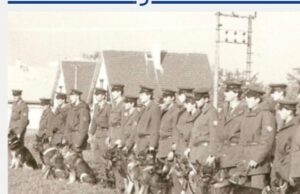
    The term “DDR” refers to lines of German Shepherds selected in German Democratic Republic (Deutsche Demokratische Republik – GDA) between 1949 and 1990.

    In the context of the Cold War, the breeding of German Shepherds was closely regulated by the East German state. These dogs were primarily intended for utilitarian purposes: border surveillance, military, police, tracking, guarding and protection.

    The selection process was based on particularly strict criteria:

    • nervous system strength; ;
    • hardiness; ;
    • endurance ;
    • utilitarian skills, including heightened guarding instincts and vigilance;
    • behavioral stability; ;
    • physical abilities; ;
    • joint health;
    • solid frame and structure.

    Contrary to some misconceptions, DDR dogs were not a different breed. They came from the same genetic base as other European working lines, all heirs to the initial vision of Max von Stephanitz, founder of the German Shepherd, but with a specific objective and selection criteria.

    Berger Allemand DDR
    Ingo Von Rudingen, GDR, 1974

    The disappearance of the original DDR program

    From a historical perspective, the original DDR program effectively disappeared with German reunification in 1990.

    During this period, many dogs from the best breeding lines were sold or exported around the world. Many were then crossed with other working lines: West German, Czech, American…

    Berger Allemand DDR

    The selection context itself has changed profoundly. The dogs were no longer intended for the same missions, and the extremely controlled state selection system no longer existed.

    It is therefore historically accurate to state that the “original” DDR dogs, produced in this very particular context, no longer exist today in their original form.

    Do modern DDR lineages still exist?

    The answer is yes… but with some nuance.

    After the fall of the wall, some breeders voluntarily chose to continue breeding only direct descendants of the old DDR lines in order to preserve certain characteristics of type and work.


    Berger Allemand DDR
    Mentor Vom Haus Iris 1981 DDR


    Bien-être animal
    Quincy Vom Haus Iris lineage 100% DDR 2014


    Berger Allemand DDR
    Knurri's Alvin 2025 bloodline 100% DDR (owned by Élevage Des Crocs Véritables)


    Modern dogs known as “DDR” are indeed descended from the old East German lines. However, it would be inaccurate to claim that current selection has remained identical to that of the 1970s or 1980s, at least with regard to behavioral criteria, instincts, and utility.

    Even during the heyday of the GDR, not all dogs produced exceptional offspring. Only the best individuals, according to the extremely strict criteria of the system at the time, were selected for breeding.

    Berger Allemand DDR
    Babsi vom Ponyhof Beilrode 2026 lineage 100% DDR (property of Élevage Des Crocs Véritables)


    Since the 1990s, selection criteria have naturally evolved according to the objectives of breeders, the disciplines practiced and the modern realities of breeding.

    Despite this, many modern descendants still retain qualities strongly associated with the DDR type:

    • instincts of guarding and defense; ;
    • strong nervous stability; ;
    • hardiness; ;
    • endurance ;
    • utilitarian temperament; ;
    • commitment to work.
    Berger Allemand DDR
    Knurri's Alvin 2025 bloodline 100% DDR (Property of Elevage Des Crocs Véritables)

    The fundamental role of genetic diversity

    One point often overlooked in debates surrounding “pure” lines concerns population genetics.

    Any population that remains closed for too long will inevitably lose genetic diversity. This reduction in the gene pool can lead to the following in the long term:

    • increase in inbreeding; ;
    • fixing defects; ;
    • decreased fertility; ;
    • health vulnerabilities; ;
    • progressive loss of certain functional qualities.

    It is precisely for this reason that many working breeders have chosen to introduce other bloodlines over the decades.

    Thoughtful breeding does not necessarily mean a loss of the desired type or qualities. On the contrary, it can help to preserve certain aptitudes over the long term by avoiding genetic impoverishment.

    The real difficulty lies not in the artificial maintenance of absolute “purity”, but in the ability to maintain a balance between genetic heritage, functionality and diversity.

    Why Czech lineages occupy an important place

    Czech lineages occupy a central place in this historical and genetic reflection.

    For decades, Czech breeding programs worked with many dogs from or very closely related DDR bloodlines. The breeding philosophy also remained strongly oriented towards working abilities and utilitarian skills.

    Berger Allemand DDR

    Subsequently, Czech bloodlines incorporated other working bloodlines while retaining a significant part of this East German heritage.

    Even today, some modern Czech bloodlines still strongly bear the imprint of the old DDR bloodlines. One can sometimes find certain instincts, character traits, or aptitudes that tend to gradually become diluted in lines claimed as “100 % DDR”.

    Berger allemand DDR
    Zarathustra Z Jirkova Dvora 2026 7 months old here (owned by Élevage Des Crocs Véritables)

    Between heritage and evolution

    Ultimately, it is probably more accurate today to speak of a DDR legacy rather than a population that has remained frozen since 1990.

    The “modern DDR” represents more of a selection orientation, a desired type and a genetic heritage than a perfectly intact reproduction of the original historical program.

    And there's nothing negative about that.

    Because the very history of the German Shepherd is one of continuous development, evolutionary selection, and adaptation to the needs of different eras.

    The DDR bloodlines themselves were built from early 20th-century German Shepherds, the common ancestors of all modern bloodlines.

    Berger Allemand DDR
    Trutz aus der Schwanenstadt
    1938
    Common ancestor of many DDR, Czech and other working lines!

    Preserving certain historical qualities while maintaining health, functionality and genetic diversity remains arguably one of the greatest challenges — and one of the greatest responsibilities — of modern breeding of the working German Shepherd.

    If this topic interested you, also read... Comparison of linesHistory of the breed

    © 2026 Élevage des Crocs Véritables


    Quick navigation:


  • "All-positive" education: a triple confusion

     «"All Positive"?

    The expression «"All-positive education" or "100% positive education"»  It has become widely accepted in the canine world. It is often presented as modern, scientific, and respectful of the dog. Yet, behind this appealing formula lie three major misconceptions: a semantic error, a superficial understanding of brain function, and an incomplete interpretation of canine communication. The aim here is not to create a divide, but to clarify concepts that, when misunderstood, can be harmful to both dogs and humans.

    1. A semantic error: benevolence is not "addition"«

    It is essential to state this clearly: kindness must guide anyone training a dog. On this point, there is no disagreement. The confusion arises when kindness is equated solely with «" positive "», understood as the systematic addition of rewards.

    In behavioral sciences, the words positive And negative They have no moral value. They only describe a mechanism: the addition or removal of a stimulus.

    • Positive reinforcement: adding something to increase a behavior
    • Negative reinforcement: removing something to increase a behavior.
    • Positive punishment: something is added to reduce a behavior.
    • Negative punishment: something is removed to reduce a behavior.

    See also this article for more details Training your German Shepherd

    Assimilate positive à GOOD And negative à wrong This is a linguistic error that leads to a flawed line of reasoning. Kindness stems from intention and the quality of the relationship, not from the type of tool used.

    A simple analogy helps to understand this: a child who is given everything, without ever setting clear boundaries, is generally neither calmer nor happier. They often become dependent, frustrated by the slightest refusal, and helpless in the face of reality. The absence of structure is not proof of love; it is often a sign of difficulty in assuming the role of parent.

    In dogs, the mechanism is comparable: kindness does not consist of allowing everything, but of accompanying learning with consistency and clarity.

    2. An incomplete understanding of how the brain works

    A dog's brain (like a human's) learns through association, anticipation, and emotional regulation. It doesn't function solely on the pursuit of reward.

    Reducing learning to the mere activation of the dopaminergic circuit (treats, toys, excitement) poses several problems:

    • there dopamine motivates action, but does not by itself structure behavior; ;
    • A dog can be very motivated… and very unstable; ;
    • The lack of a clear framework increases uncertainty, and therefore stress.

    The brain needs predictability. This requires consistent rules, understandable boundaries, and clear consequences. However, education focused solely on immediate reward often neglects this crucial structuring element.

    Complexité du cerveau
    Brain complexity
    – Source: «Veterinary Psychiatry of the Dog,» Noledge editions

    Learning is not just about seeking pleasure: it is also about integrating what is expected, what is not, and why.

    3. A lack of understanding of canine and social language

    Dogs communicate primarily through:

    • posture,
    • gestures,
    • micro-signals,
    • distance and movement.

    Its language is largely regulatory and inhibitory. In natural canine and interspecies interactions, learning relies very little on reward and much, if not primarily, on social adjustment.

    The works described in particular in Veterinary psychiatry of the dog (Masson, Bleuer, Muller, Pageat) emphasize the fundamental role of the mother and other puppies in the acquisition of self-control. The puppy learns to behave correctly through:

    • the refusal of physical contact,
    • the interruption of the game,
    • the growling,
    • and, if necessary, inhibited bites leading up to the puppy whining.

    These responses are neither violent nor pathological: they are structuring and, above all, they are canine language, whether we like it or not. They allow the puppy to understand boundaries, calibrate its behavior, and develop genuine emotional regulation.

    The veterinarians quoted above emphasize that depriving a puppy of these contacts, which appear rough not to say brutal, increases the likelihood that the puppy will develop behavioral problems!

    By trying to eliminate all forms of frustration, opposition, or constraint, we deviate from the dog's actual behavior and social learning system. A clear boundary, expressed calmly and proportionately, is perceived as information, not aggression.

    A clear framework is often more reassuring than a series of rewards distributed without careful consideration of behavior.

    4. The risk of dogmatism and the loss of useful tools

    The major problem is not the use of positive reinforcement, but the fact of voluntarily depriving oneself of other levers on ideological principle.

    A simple, universal, and non-violent example perfectly illustrates negative reinforcement: the seatbelt warning chime. The sound stops when the belt is fastened. This mechanism saves lives, causes no pain or trauma, and is not contested by anyone (except perhaps in the moment when you're putting on your seatbelt while cursing 😅).

    In dog training, refusing by dogma any tool related to withdrawal, even physical constraint or disapproval deprives the dog of information that is natural for him.

    In practice, this approach shows its limitations, particularly with:

    • traumatized dogs,
    • dogs with very strong characters,
    • selected bloodlines for initiative and resistance,
    • or dogs already exhibiting problematic behaviors.

    In these situations, understanding and knowing how to use all available strategies is essential to avoid educational deadlock. The goal is never to coerce for the sake of coercion, but to find the right balance between motivation, structure, and safety.

    Dog training benefits from being pragmatic rather than dogmatic, and adapted to the individual rather than to an ideology.

    Conclusion: Move beyond the slogan, return to the living

    Dog training is neither a matter of morality nor a universal recipe. It is an encounter between two different nervous systems.

    Exiting the «"All positive"», This is not about returning to brutality. It's about accepting that:

    • The dog needs both pleasure and structure.,
    • Kindness does not preclude clarity.,
    • Understanding a dog involves speaking its language, not just projecting our own.

    In education, as elsewhere, slogans are reassuring. Understanding, however, requires a little more effort… but it shows greater respect for life.


    © 2026 Élevage des Crocs Véritables


    Quick navigation:
  • Animal welfare and anthropomorphism

    Animal welfare: respecting its nature rather than projecting it

    Bien-être animal


    In many contemporary discussions, canine well-being is defined through a human lens. Comfort, warmth, constant presence, and uninterrupted attention are assumed to guarantee happiness. This reasoning seems logical when viewed from a human perspective, but it often proves overly simplistic. A dog's well-being is not measured by the number of cushions, but by the opportunity to express its true nature.


    Anthropomorphism It consists of projecting our human physiological and emotional needs onto the animal. We cover it to protect it from the cold, we surround it to reassure it, we forbid it from getting dirty as if it were a child.

    The intention is generous, the effect is not always.

    This is not to say that the dog doesn't like being with us in the warmth, following us around, sleeping on a comfortable bed, but rather that it doesn't correspond to its true nature.

    Even if it's comfortable, it's not necessarily where he thrives.

    Bien-être animal

    Overprotection, excessive comfort, and imbalance

    An overprotected dog is deprived of what shapes it: the experience of its environment. Excessive comfort can isolate, reduce stimulation, and ultimately generate stress.

    Behaviors that are later interpreted as character or obedience disorders often stem from a deeper frustration: lack of freedom, absence of clear rules, inability to explore, life without surprises.

    Bien-être animal

    Hardiness doesn't inherently create suffering. On the contrary, it offers opportunities for movement, change, and adaptation. Rain, wind, temperature variations, smells, soil, and vegetation are not aggressions for a healthy dog. They form a natural environment in which it knows how to thrive, and above all, in which it flourishes.

    Understanding what a dog wants

    When you observe a dog free to roam in a safe environment, you discover fundamental behaviors. It digs, sometimes for no apparent reason, simply to smell the earth and its scents.

    Bien-être animal

    He sniffs the tracks for a long time, follows a trail, rolls in what seems dirty to us. He will lick mud or dry carcasses, for the taste, for the smell, for the sensory experience. He interacts with his pack in a subtle language made up of postures, distances, vocalizations, and silences. He barks, becomes agitated for a reason inaudible to us, basks in a ray of sunshine in the bitter cold, or sleeps in the pouring rain when he has the option of taking shelter, and all for reasons that are foreign to most modern humans.

    He can remain motionless for a long time, observing. Then he'll set off briskly to explore another area. This back-and-forth of attention and movement builds his balance. Far from screens, carpets, and sofas, The dog feeds on the real world.

    Bien-être animal

    These behaviors are not mere distractions. They contribute to a dog's cognitive, emotional, and physiological development. A dog that never has the opportunity to experience this gradually loses part of its identity.

    Loss of hardiness and biased selection

    The confusion between well-being and comfort also influences the way some dogs are selected.

    When appearance and childlike features are prioritized, function and health are sometimes overlooked. Some bloodlines no longer breathe properly, cannot tolerate exertion, and suffer from chronic illnesses.

    We sought to please the human eye, without worrying about the real well-being of the animal: we can then coddle the animal as much as we want, the damage is done.

    Bien-être animal

    This tendency stems from the same mechanism: thinking about the dog based on our own criteria. Paradoxically, a robust, well-built animal, capable of living outdoors, running, sniffing, and tiring itself out, is a healthier animal.

    A dog's well-being depends on access to nature and the freedom to express its instincts within a framework acceptable to humans.

    It does not need constant attention but a consistent environment.

    Having the choice to sleep under a dry shelter or in the rain, moving freely in natural terrain, interacting with other dogs that form his pack: what if these were actually the needs of man's best friend?

    Bien-être animal

    Wouldn't having the option of a space where one can withdraw without being disturbed be offering him the respect he deserves?

    If we choose not to tell ourselves a story that suits us, how can we continue to call it our best friend? Smoothed-out personality, imposed obedience, schedules for going to the bathroom, affection on demand, processed food, altered appearance, forced or forbidden reproduction… In its place, would you call us your best friend?

    Balance does not arise from fusion, but from trust.

    Bien-être animal

    It is not born from hyper-comfort, but from experience.

    Psychological resilience is built through alternating between rest and exploration, closeness and autonomy, interaction and the possibility of withdrawing from it.

    A dog that can experience the world through its canine lens is more serene, more confident, more stable.

    To love a dog is to respect it for what it is, not for what we would like it to be.

    True animal welfare is not about making the dog a member of the family in the human sense. It is about considering it as a living being with specific needs.

    Understanding a dog means accepting that a mud puddle can be more interesting than a cushion, that a pile of wet leaves can be more attractive than a blanket, that a group of fellow dogs can matter more than a shared sofa.

    Authentic love does not transform the animal into a human or into a cuddly toy – a tool for emotional transfer! A stuffed animal can take on this role.

    True love observes, adjusts, and secures without confining.

    It allows what makes a dog to exist: its sense of smell, its movement, its strength, its endurance, its curiosity, its pack…

    Respecting a dog means allowing it to be a dog!

    If these topics interest you, also take a look at this page. Preserve rusticity

    And Hardiness, nervous balance and versatility

    © 2025 Élevage des Crocs Véritables


    Quick navigation:
  • Training your German Shepherd

    Training your German Shepherd: Building a solid foundation from the start


    Éduquer son berger allemand

    Training a puppy is not about teaching it commands, but about building a clear and balanced relationship with its owner.

    For the German Shepherd, this stage is even more crucial: it is an intelligent, reactive and sensitive breed, which needs a consistent framework from the first weeks.

    This article, which includes video resources and a program, aims to support owners of German Shepherd puppies and adult dogs from the breeder by providing them with simple, progressive and adapted tools.

    These tools can also serve as a basis for canine sports practitioners, but of course this remains a simple basis; the experienced reader will take this into account.

    In our experience, when relationship problems arise, often during the puppy's adolescence, it is always because the foundations of a good relationship have not been laid, and often due to a lack of knowledge on the part of the owners.

    Once these foundations are in place, the problems often disappear as if by magic, provided that they have not already taken on dramatic proportions, in which case it will probably also be necessary to seek advice from a specialized and competent educator.

    Each concept will be illustrated by a short video to facilitate understanding and implementation.

    These are concepts that will need to be understood and then put into practice; the videos serve only as examples.


    Training your German Shepherd: The general action plan

    We will not follow a linear method.
    It is not about doing one type of training first, then another, but about learning to combine several approaches in parallel.
    A puppy learns through repetition, but also through variety. By working a little on different aspects each day, you develop a balanced, attentive, and self-assured dog.

    The training is divided into three main complementary parts:


    1. The “Out Drive” approach: calmness, relationships, and communication

    THE Out Drive - Without External Excitement/Motivation encompasses a series of exercises which will be performed without too much excitement and with the sole motivation being the relationship with the master: walking at heel, recall, basic positions, understanding “yes” and “no” as well as focusing on the master.

    It is in these moments that the puppy's, and later the dog's, trust in its owner is built.
    The tone of voice, posture, and consistency of gestures become the main tools of communication, which he will thus learn to decipher.

    It is important to remember that fluid communication, in this case with a dog, stems from a mutual ability to understand each other.

    The goal is not to “train” the dog, but to learn how to communicate with it.
    It is this relationship of calm and mutual understanding that will later allow for the management of exciting situations without conflict.

    To achieve this, we will first use eye contact, capturing the dog's attention and communicating on a soul-to-soul basis. We will reinforce this with our voice, learning to modulate our intonations (high and joyful for praise, low and stern for disapproval). We will also use our sense of touch, stroking, feeling, and guiding the dog's movements appropriately, whether with the leash, our hands, or our legs.


    2. “In Drive” work: motivation, action, and learning

    THE In Drive - with external excitement/motivation This corresponds to the state of controlled excitement in which the dog learns through motivation and to obtain an external reward. The working German Shepherd naturally enjoys this state of excitement, which can become joyful and motivated if properly directed, and frustrated and disorganized if not addressed.

    To channel this energy, we rely primarily on the principles of operant conditioning, that is, on the management of rewards and corrections.

    A key aspect of using this method correctly is timing: the action must be punished or reinforced immediately to be effective. After a few seconds, the animal no longer associates its action with the owner's response.

    When you punish or criticize your dog for an action committed several minutes or hours before, he understands that you are unhappy but does not establish a causal link with the action for which you are reacting.

    The 4 pillars of operant conditioning are:

    • Positive reinforcement : we add a treat to reward good behavior. (here, a treat and a "YES" followed by a look towards the master are rewarded)
    • Negative reinforcement We remove a hindrance when the desired behavior appears (Here, the leash tension is released as soon as the dog executes the command; the beeping stops when you put on your seatbelt in the car.)
    • Positive punishment : we add a constraint to signal an error (here the dog is restrained with the leash to force it to correct its fault, associated with a "NO" in a serious and firm tone).
    • Negative punishment We take away pleasure for committing a foul (here we hide the ball until we get the right behavior but we can also stop the game, stop giving attention…).


    We find it absurd to reject aspects such as the current trend of all-positive communication. Those who claim to practice all-positive communication simply ignore the workings of operant conditioning and either deprive themselves of a comprehensive communication method or use different aspects of this method without even realizing it.

    On the other hand, we do not condone gratuitous violence in any way, which has no place in this method (we must also not conflate violence with marked physical contact such as that used by dogs among themselves: the German Shepherd in particular is not made of sugar, you only have to watch them interact with each other to realize this).


    THE In Drive - in a state of excitement can then be applied along two complementary lines of work: the Food Drive - Excitement/Motivation Through Food and the Game Drive - Excitement/Motivation Through Play.


    3. The “Food Drive”: Building the right habits

    Food is an excellent learning tool, particularly for young puppies.

    Eating is a vital issue; the dog has this ingrained in its nature.

    Using this method promotes concentration and rapid reinforcement of correct behavior.
    It is also used to create motor automatisms: coming when called, sitting, lying down, keeping eyes on the master.

    The goal is not to make the puppy dependent on treats, but to teach it the actions expected of it and that good behavior always brings something positive.

    This method will create automatic responses in the dog's nervous system with very little coercion. Once these responses are learned, they will be named, and the dog will be able to perform them without treats.

    This tool is particularly useful between 2 and 8 months, a period when associative memory is most receptive.

     Learning to look at a treat with a 10-week-old puppy.

    Associating the name and the pleasant with a 10-week-old puppy

    Reinforce the correct positions, then name them


    This technique can then be used to introduce more complex exercises, for example, "forward", "backwards", and "at the foot" with reverse walking…


    4. The “Game Drive”: channeling energy through play

    Play is a form of emotional communication.

    In nature, it is through play that wolf cubs develop their natural instincts.

    They thus learn to track, then pursue, seize and finally kill prey…their survival into adulthood depends on this ability, initially developed through simple games.

    This also touches on very powerful instincts, which must be learned to channel and redirect for the modern life of the civilized wolf that is a German Shepherd.

    It is through play that the puppy learns to manage itself during phases of intense excitement with its human owner.
    The game helps to develop motivation, confidence and complicity, while teaching the dog to control itself.

    The goal is to alternate between moments of action and returns to calm.
    The puppy understands that the owner controls the game, and therefore the excitement. This naturally reinforces the owner's authority and credibility.

    This is generally done using a rope ball and/or a small bite tug, which satisfy and divert predatory instincts.

    In many German Shepherds, the real attraction to this type of game begins around 4 to 6 months or even later, and it can then surpass the interest in food.

    Exercises with the ball

    Here are exercises with the sausage.

    5. The coherence of the program

    Perseverance and continuity are the keys to these methods; with a few minutes every day, results will be guaranteed.

    Every moment should be an opportunity to apply this type of program. First and foremost, mealtimes, but also during a walk, or around the house.

    Repetition, more repetition.

    Then, changing the environments—indoors, outdoors, in the city, in the countryside, with other dogs or animals around—the relationship with the owner must be so engaging that the external environment is no longer a problem..

    Here in town, amidst the chickens, some dogs having to stay still, walking at heel in groups of 4 with goats for entertainment… The possibilities are endless and can be adapted to your needs.

    Each training day will combine a little bit of Out Drive, a little bit of Food Drive and a little bit of Game Drive.
    It is this alternation that creates the emotional balance of the puppy.

    An example of a daily routine:

    • A few minutes of calm walking, physical contact, building a relationship (Out Drive)
    • A short, motivating exercise using a treat at mealtimes (Food Drive)
    • A short, structured game during the walk (Game Drive)
    • And always a return to calm before the end

    Peace and quiet here amidst the traffic 😁

    Over the months, these same exercises will evolve: the durations will increase, the distractions will increase, but the logic will remain the same.

    The aim of this article is to give every owner the ability to build a stable, confident, obedient dog without coercion, and happy in the relationship with its owner.

    We will try to supplement it in the future by adding exercise ideas, scenarios in the city, among animals, etc…

    As always, do not hesitate to contact us if you have any specific needs.

    If you found this article interesting, also check out the page Articles and Reflections And Living with a German Shepherd?


    © 2025 Élevage des Crocs Véritables


    Quick navigation:


  • BARF and food supplements

     BARF is easy and economical

    Feeding your dog a healthy diet without breaking the bank

    One of the obsessions when talking about feeding your dog a BARF or homemade diet is the fear of an unbalanced diet, unlike kibble, which, thanks to more than fifty years of relentless marketing, is touted as perfectly adjusted to the nanogram.

    This is highly debatable, especially since no living being on earth (not even humans!) consumes the perfect dose of micro and macro nutrients at every meal.

    Modern research is increasingly demonstrating the importance of live enzymes, particularly for boosting the immune system and preventing autoimmune and cancerous diseases. If these topics interest you, also read our pages Food And Health

    That said, even though by giving a very simple base of carcasses, meat and table scraps one can do just as well (or better) and cheaper than with industrial food, one can still do even better with some fairly economical and effective food supplements.

    At a time when we hear so much about animal welfare, the question of psychological well-being induced by a good meal is often forgotten!

    Barf et compléments alimentaires

    A quick reminder of the basics.

    The essential element: a base of fleshy bones.

    The BARF (Biologically Appropriate Raw Food) diet, as described in particular by the Dr. Ian Billinghurst)  aims to respect the dog's natural needs: raw meat, bones, offal... and a little common sense!

    Barf et compléments alimentaires

    Regarding quantities:

    – Adult dogs: allow approximately 2 to 3 % of body weight per day.

    -Puppies: up to 10 % of their weight at 2 months, gradually decreasing as they grow. You can also read our article How to adjust a dog's food ration?

    Typical composition of the bowls:

    Meat and bones (60-80% of the total bowl weight):

    • 4 to 5 days per week: chicken carcasses (approximately 25 % of bones and 75 % of meat/skin).
    • 1 to 2 days per week: chicken thighs or drumsticks, which are richer in meat (80 % muscle, 20 % bone).
    • 1 day per week: a meal based on red meat + offal (liver, heart, kidneys…).

    And we don't hesitate to recycle table scraps (20-40% from the bowl):

    • Cooked or raw vegetables, rice, pasta, stale bread, fruit… and even a little kibble if needed. There's no need to be anti-grain; it's a marketing ploy. Unless there's an allergy, grains aren't a problem in themselves if the total amount in the food bowl is below 40%.

    Essential dietary supplements

    A few simple additions are enough to balance the diet and boost the dog's vitality:

    • Brewer's yeast (2 to 4 g / 30 kg): B vitamins, skin, hair, immunity.
    • Kelp powder (0.5 to 1 g / 30 kg): iodine and trace elements.
    • Salmon or sardine oil (1 tsp/day): anti-inflammatory omega-3

     Little extras to add from time to time

    Not necessarily essential every day, but useful from time to time or if you want to do even better:

    • Plain yogurt or cottage cheese (a large tablespoon from time to time): intestinal flora.
    • Organic cider vinegar (1 tsp in the bowl 1 to 2 times a week): digestion, acidity, minerals.
    • Quality vegetable oil (sunflower, flax, camelina…) (1 tsp in the bowl 1 to 2 times a week): omega-6 or 3 as appropriate.
    • Raw egg yolk (1 to 2 times/week): biotin, vitamins A/D/E
    • Shrimp carcasses: Chitin and glucosamine: promote joint health (like green-lipped mussels), useful in active or older dogs, marine minerals: calcium, phosphorus, magnesium, iodine.
    • Crushed eggshell: calcium, magnesium, zinc, boron, copper, iron, manganese, strontium — in very small quantities, but useful.
    • Green-lipped mussel (1.5 to 3 g / 30 kg): joints, flexibility, comfort possible every day
    • Turmeric + black pepper: mild anti-inflammatory (0.5 to 1 g turmeric/day) for inflammation, joint pain, intensive training.
    • Ground pumpkin seeds (1.5 to 2 g / 30 kg): zinc, can be consumed daily
    • Oily fish (sardines, tuna, salmon…): rich in omega-3, vitamin D and highly digestible proteins — 1 to 2 times a week, 30-50g for a 30kg dog.
    • Cod liver oil: source of vitamins A and D + EPA/DHA — 1 ml/10 kg of body weight, 1 time/week maximum (avoid vitamin A overdose).
    • Green tea leaves: rich in cell-protective antioxidants (catechins) — 0.5 g/30 kg, 1 time/week maximum, well dried.
    • Herbs (thyme, rosemary, oregano, etc.): digestive, antioxidant and mild antiseptic — 1 to 2 pinches/day for a 30 kg dog, to be sprinkled on the ration.

     In conclusion: a simple, healthy and economical diet

    Feeding your dog raw or fresh food isn't that complicated.

    No need to buy organic bison or acai berries: chicken carcasses, some offal and leftovers, simple supplements and a little common sense are enough.

    Let's remember that dogs have survived alongside humans for over 30,000 years by eating their leftovers, and it's probably even because of these very leftovers that they gave up their freedom as wolves… but that's another story…

    © 2025 Élevage des Crocs Véritables


    Quick navigation:
  • Guard or Defense Episode 2

    Bloodlines, selection and balance between guard and defense

    The family protection dog is neither an ordinary pet, nor a sporting dog, nor a military or police dog.

    When talking about protection, it's essential to distinguish between two very distinct missions: territorial guarding and defense. Often, wanting both means having a less specialized dog.

    Garde ou défense
    Uther of True Fangs

    Each position involves different requirements, both in terms of selection and education.

    In this article, we discuss the choice of lineage, puppy, essential living conditions, and above all the adaptation of the path according to the expected role.

    Guard, defense, or both: three different logics

    * A defense dog acts on command or by analyzing the situation. It accompanies its owner outside the home, encounters people without reacting, but remains vigilant. It must be able to demonstrate great neutrality, but also be able to react with force, lucidity, and composure. It deters by its presence, but it must also know how to intervene if necessary.

    It is a very socially exposed dog, therefore very supervised.

    * The guard dog, on the other hand, protects a territory that it considers its own. It acts without orders, by instinct, through the fence or from a distance. It must not attack but above all deter: its bark, its posture, its gaze are its weapons. It must be stable but instinctive, self-confident but not sociable towards strangers.

    Garde ou défense

    Most dogs are very active as soon as they spot a fellow dog or a wild animal approaching their territory, but few do so these days when it comes to humans; this distinction is fundamental.

    * The dog capable of performing both at a high level is rare and relies on a perfect compromise: instinct, nervous balance, good training, fine management of territory and the bond with humans.

    This is possible with a rigorously selected German Shepherd, raised in good conditions and consistently monitored.

    The defense dog: a balance between sociability and restraint

    For defense, it is essential that the dog be exposed from a very early age to a wide variety of environments: markets, parks, city centers, train stations, narrow passages, crowds... He must meet all kinds of people without this arousing in him either fear or euphoria. He must be curious, solid, and capable of discernment.

    Garde ou défense

    Theo Real Fangs

    But that doesn't mean you have to make him accessible to everyone. It's important to never let him be petted, fed, or solicited by strangers. He must remain neutral, suspicious, but not reactive. The bond of trust must be exclusively centered on his owner or family.

    The guard dog must learn to alert on command, bark, analyze an attitude, and calm down as quickly as possible. These skills are developed with a trainer or assistant, in a rigorous environment.

    Biting as such is not essential if the work is done well.

    IGP type training (if you don't know what it is Click here) can however be used as a tool, provided that the mechanisms are understood: biting should never be the basis of learning, but come second as a reward for courage and commitment, not as a driving force for action. A dog that bites because it likes to bite an artifice (costume or cuff) = prey instinct.

    This is not necessarily a guard dog. It reacts to movement, not intent.

    It is therefore crucial not to confuse a sporting dog with a civil protection dog.

    Furthermore, remember that in France, training a dog to attack (the active biting phase) is out of the question for an individual. In other countries, such as the United States, for example, this type of training is common.

    Dogs from purely sporting breeding lines are often highly motivated by and for biting: fast, powerful, but sometimes lacking vigilance and/or too impulsive and dependent on humans.

    If this aspect interests you, also read our articles and pages on this subject: Prey instinct in modern lineages  ,   Limits of a sports-centered selection  ,  Dog sports: a field of expression   And   Thinking about selection differently 

    Needless to say, dogs from show lines, focused solely on appearance, are rarely able to perform a reliable protection mission.

    In the absence of behavioral selection oriented in this direction, and for good reason, this type of dog must allow itself to be touched and handled by the judge and its handler at the exhibition (who is sometimes not the owner himself).

    This does not mean that a protection dog cannot participate in dog sports.

    On the contrary, a well-chosen activity (obedience, tracking, adapted IGP) can strengthen complicity and balance. But it must always remain in service of the ultimate goal, and not become an escape from instinct or a source of confusion.

    Poorly targeted training can be counterproductive or even harmful to the main objective.

    Both males and females can fulfill this role, each with their own unique qualities.

    The guard dog: instinct, territory, stability

    Guarding is based on territorial instinct, the desire to defend a clearly defined area, and a form of behavioral autonomy. The dog must feel at home, in close contact with its family, while maintaining a clear distrust of strangers.

    Galerie photos, Galerie vidéos

    The guard dog is primarily a deterrent. It protects a territory, detects anything out of the ordinary, and signals an approach or attempted intrusion.

    Its role is primarily to scare people away: it makes its voice heard, makes its presence felt. It is not necessarily intended to make contact with the intruder.

    This type of guard is especially suitable for isolated homes. In cities, deterrent barking can quickly cause problems with neighbors.

    The ideal, simplest, and most effective approach is to form a male-female pair that lives together in freedom on the territory. They form a mini-pack. This creates a natural balance in reactions, reinforces stability and attachment to the territory, and promotes instincts and growth.

    Otherwise, it is generally easier to find a male with this ability, especially if the territory to be protected is large.

    But the dog is a pack animal, he likes company and he will be less happy and balanced in his work if he lives alone. Read also What the German Shepherd requires on a daily basis

    The bond with the family must be strong and respectful: esteem, affection, structure. The guard dog must primarily be a dog that is completely harmless and gentle with its family.

    Selection is even more important here than for defense: the guard instinct cannot be invented. Choosing the lineage is the number one point, then comes choosing the puppy within the litter.

    It is likely that a breeder who does not offer character selection or who tells you " all my dogs guard", is either ignorant, or at best is lying to himself, which is like playing the lottery.

    It is not an exact science, but we must at least try to detect within the litter the visible beginnings of this instinct: a puppy that is too sociable or too elusive, too dominant, should often be excluded.

    You have to know how to observe the interaction within the litter, the reaction to the unknown, the ability to isolate yourself and monitor.

    If you want to be sure, you should wait between 6 and 12 months, which is rarely possible.

    This is only the beginning, it is then a matter of making it mature properly, not inhibiting but on the contrary strengthening the instincts.

    This is especially important during the first two years: the dog must grow up in an environment that makes him happy, surrounded by kindness. A dog that feels respected and well-fed will, in turn, naturally seek to protect what he perceives as vital.

    Education: respect for instinct, control of context

    Even a guard dog needs outdoor experiences. He must be able to walk in the city and be around other humans or dogs without panic or aggression, but without seeking contact either. He must be harmless outside the territory, but reserved.

    In the territory, the first experiences must be carefully supervised. During its first year, the puppy should be isolated from any direct contact with outsiders in the family circle: separate room, kennel, barrier, ideally a distance of about 10m should be left.

    It is obvious that if the puppy shows signs of alert, often at nightfall, it is not a question of reprimanding him but on the contrary of congratulating him.

    This strengthens his trust and exclusivity towards his family.

    From the earliest age of 6 months, often closer to 10 to 12 months, depending on the dog's maturity, you can begin the first guard training exercises: in the absence of the owner, a stranger (assistant) comes to show himself through the fence, unannounced. At the first signs of alert from the dog (barking, posture, surveillance), the assistant moves away, feigning fear and flight. The owner then goes out and calmly congratulates his dog.

    These exercises reinforce the instinct without forcing it. Here again, the goal is not to make the dog bite, but to strengthen deterrence and confidence in its ability to deter.

    Later, control exercises can be introduced, asking the dog to tolerate a presence in the territory (for example the postman) without reacting, in order to refine its understanding of limits and roles.

    Sélection du Berger Allemand, la garde

    Building a reliable and suitable pair

    A defense dog, a guard dog, or a dog that combines both functions, require different selections, methods, and living environments.

    It is not a matter of performance, but of adequacy between the individual, his environment, his missions and the nature of his link to the master.

    The German Shepherd, provided it is chosen carefully, from a stable and lucid lineage, remains today one of the rare breeds capable of ensuring one or the other of these roles - or even both - while respecting the law, security and family balance.

    In conclusion, it seems important to us to distinguish between guard and defense functions, to restore their nobility, because of all the tasks to be accomplished, especially in a country like France, it is perhaps one of the most subtle that is required of the dog.

    It seems essential to us that everyone clarifies what they are looking for as a priority objective (company only or more sport, mission, guard or defense) and does not confuse them with each other or with the work required of professional dogs.

    Questioning these subjects means, above all, choosing a vision of the human-dog relationship that we wish to build.

    Is yours already conscious and assumed?

    Berger allemand elevage- Skinner et Pavlov


    © 2025 Élevage des Crocs Véritables

  • Guard or Defense?

    Episode 1: understand the real differences between custody and defense, and what the law allows (or prohibits).

    Home protection, on-demand response, deterrent role: between preconceived ideas and legal reality, we set the foundations straight in a series of concrete articles.

    Garde ou défense?

    The German Shepherd is one of the few breeds capable of both autonomously guarding a territory and actively defending its owners. It's important to understand what these two functions entail, as they require very different skills and supervision.

    Too often confused in the collective imagination, guarding and defense obey distinct behavioral, technical, and, above all, legal logics. This article aims to clarify these essential concepts, in order to allow each owner of a protection dog to act responsibly and effectively, particularly within the framework of French legislation.

    Guard and defense: two very distinct missions

    Guard: an autonomous deterrent

    The guard dog acts without waiting for orders. It detects any strangers in the family circle and adopts a deterrent attitude: barking, excitement, repeated movements along fences, high posture. It does not seek physical contact, but imposes a strong presence, intended to force the intruder to abandon it without direct confrontation.

    Garde ou défense
    Uther of True Fangs

    This behavior is based on territorial instinct. It is all the more effective when the area is fenced, clearly defined, and identified by the dog as its domain. The guard dog is not an aggressive dog, but a vigilant, self-confident dog, capable of reacting without spiraling into turmoil.

    Defense: controlled neutrality, targeted action

    The guard dog must be able to operate in a variety of human environments: on a walk, in a store, at the market, in a garden with guests. It must remain neutral as long as no real threat arises.

    Garde ou défense
    Yannick Le Gallou and O'Gun

    But in times of danger, he must be able to react on command or in a controlled manner to direct aggression. This requires rigorous selection, precise training, and unfailing emotional stability.

    Why the German Shepherd is one of the few dogs that can do both roles

    Few breeds combine the qualities necessary for both independent and deterrent guarding and controlled defense on command. The German Shepherd, when properly selected, is one of them. It has:

    • a strong ability to concentrate and analyze,
    • an ability to work in close contact with people,
    • a nervous strength superior to that of many other breeds.

    Conversely:

    • Molossers are powerful but sometimes too reactive.
    • Livestock protection dogs have a behavioral autonomy that is difficult to reconcile with a civilian framework.
    • Sporty Malinois can be unstable, hyperactive, and lack neutrality in social settings or vigilance and suspicion when left to their own devices.

    Garde ou défense ?

    The German Shepherd offers a balance of intelligence, discernment, strength, docility, and the ability to channel its instincts. This makes it, particularly in France, an excellent working dog for mixed functions, provided it is well selected and supervised.

    Let us point out, however, that guarding and defense require certain almost opposite qualities, so a dog that is excellent in one or other of the two aspects will often be of a lower level in its opposite; we will come back to this in a future chapter.

    What French law says

    Civil liability: the owner is fully liable

    Article 1243 of the Civil Code states that “the owner of an animal […] is liable for the damage caused by the animal.” This liability is automatic.

    Criminal liability: use of animals as weapons

    Article 222-13 of the Criminal Code considers a bite to be aggravated violence if it is used deliberately. Article R.623-3 punishes allowing a dangerous animal to roam.

    What to do if your dog bites someone or you have been bitten? here

    Concrete examples and case law

    • Bite by an intruder at night on enclosed land: civil liability incurred, no criminal sanctions (this is an example, but depending on the context a completely different judgment could have been rendered).
    • Attack through low fence: conviction for negligence.
    • Attack on a passer-by in the street: disproportionate use, criminal proceedings initiated
    • The important thing to remember is that self-defense and proportionate use of force must be demonstrated in order to avoid criminal sanctions.

    Internationally: models unsuited to the French context

    In Italy, the defense of private property is reinforced, in the United States, some states apply very broad self-defense laws, overall on these subjects the legislation is more permissive, . But these practices are not transposable. In France, self-defense with a dog remains strictly regulated, and can never be improvised.

    Conclusion

    Garde ou défense ?

    Understanding the distinction between guard and defense is essential. The German Shepherd can fulfill both functions, provided it is properly selected, trained, and used in compliance with the law. This not only ensures the dog's effectiveness, but also the legal security of its owner.

    In the next article, we will discuss the importance of choosing the right breed and puppy, why a sporting dog, even one with experience in biting, is not what is sought for this type of task, and we will highlight the essential living conditions to offer these precious allies, to make them both more efficient and happy.

    Guard or Defense Episode 2 here

    If you are interested in these topics, also read our L pageskeeps a job? And  Property custody

    Back to Articles and Reflections

    © 2025 Élevage des Crocs Véritables

  • German Shepherd and Children: What You Need to Know

    The German Shepherd is a dog renowned for its intelligence, loyalty, and versatility. Used for decades as a working dog, it has also always been a regular companion in homes.

    But can they really live with young children? The answer is yes, in some cases, but not without precautions. Here are the things you need to know before welcoming a German Shepherd into a family with children.

    Élevage de Berger Allemand - Enfant

    1. A dog naturally close to its social group

    The German Shepherd is a breed that is very attached to its home. It is often attentive to what is happening around it and easily develops bonds with family members, including children.

    Some individuals will even naturally adopt a posture of vigilance or protection towards younger people.

    But this closeness can sometimes be misinterpreted: the dog is not a babysitter. Its reassuring presence does not replace parental education or active adult supervision.

    2. Physical power that imposes clear rules

    Even though he is well-intentioned, the German Shepherd remains a large, powerful dog with developed muscles.

    His enthusiasm can translate into abrupt behavior, especially when he is young: running, jumping, pushing without wanting to.

    This can be enough to cause a small child to fall, or to injure them unintentionally during poorly supervised play.

    Berger Allemand Enfants

    It is therefore essential to set boundaries early on, teach the dog not to rush at children, and manage moments of excitement. Training in calmness and impulse control should be an integral part of daily life.

    3. No dog should be left alone with a young child.

    It's a basic rule, valid for all breeds: a child should never be left alone with a dog, no matter how reliable it is.

    Communication between a young child and a dog can be confusing: sudden movements, shouting, unpredictable reactions can generate stress or inappropriate behavior in the animal.

    Because the German Shepherd is a sensitive and highly reactive dog, it can be difficult to cope with certain clumsiness or feel cornered if it doesn't have the opportunity to isolate itself. It is essential to respect its signals, give it its own space, and not force it to interact.

    4. An intelligent dog, but one that needs structure

    The German Shepherd understands quickly, but that doesn't mean he obeys without limits. His quick wit means he sometimes tests the rules. He can also be in constant need of stimulation, which can tire out a family that is not available or already overworked.

    Consistency in training is essential: the dog must understand what is and isn't allowed in its interactions with children. This requires time, patience, and sometimes the help of a dog training professional.

    5. A dog that can live well with children... if they are also educated to respect animals

    Respect must go both ways. Many incidents occur not because a dog is aggressive, but because it is being harassed, continually solicited, or handled without its consent.

    Pulling ears, riding the dog, playing in the dog's basket: these are all common behaviors among young children, but should be avoided at all costs.

    Even before the dog arrives, it is therefore important to educate the child about the presence of an animal: do not disturb it when it is eating, do not wake it up, do not hold it tightly, and above all let it move away if it feels the need.

    To go further, also consult the official recommendations ANSES

    6. A good companion, but not suitable for all families

    The German Shepherd can become an excellent companion for a dynamic, present family, capable of supervising interactions and meeting its needs.

    It is not recommended in a home where adults are rarely available, where dog training is neglected, or in families looking for a passive and undemanding dog.

    This breed requires commitment, both physical and mental. It thrives in a stable environment, where rules are consistent, activities are regular, and relationships are balanced.

    Berger Allemand Enfants

    Conclusion

    The German Shepherd can live very well with children, but it's not a dog for everyone. Its strength, intelligence, sensitivity, and need for activity make it a demanding dog, demanding as much from its owners as it can give them. Proper socialization, careful training, and mutual respect between the dog and the child are the keys to a successful cohabitation.

    You can also consult our section Living with a German Shepherd? Here

    Back to Articles and Reflections

    © 2025 Élevage des Crocs Véritables


    Quick navigation:


  • Skinner and Pavlov (continued)

    Skinner And Pavlov in modern dressage (following)

    Vivre avec un Berger Allemand- Skinner et Pavlov

    Restoring classical conditioning to its place or when emotion becomes the reward.

    In our previous article, we distinguished Skinner's operant conditioning—now widely used in modern methods—from Pavlov's classical conditioning, often relegated to the status of a mere historical anecdote. However, the latter systematically acts in the background; far from being outdated, it is, on the contrary, at the heart of the emotional relationship between the dog and its owner.

    As we increasingly talk about "motivation" in training, it is urgent to remember that motivation is not always a trade for a toy or a treat, at the risk of the latter becoming the source of classical/Pavlovian conditioning. As a reminder, it is through repetition that the dog associates a sound, a place, an action with a physiological response. (The dog salivates when it hears the bell).

    If the dog is happy, excited, motivated every time he sees the ball, the sausage, the costume, the treat, it is normal and positive, a source of motivation for operant conditioning, (reinforcement action +- or punishment action +-).

    But it can and should also emerge from the affective, almost invisible association between a behavior and an emotion generated by the presence and interaction with its master.

    When pleasure becomes Pavlovian

    Classical conditioning, by its very nature, works without the dog having to "do" anything. It links two elements: a neutral stimulus (voice, attitude, situation) and an emotional or physiological response (pleasure, relaxation, security, etc.). This process is automatic, not voluntary, and that's precisely what makes it so powerful.

    Let's take a simple example: a master who praises his dog every time he returns to the recall. If his intonation and the associated gesture are consistent and repeated, the action (in this case, the recall) ends up evoking a pleasant sensation in the dog. Returning to the master is no longer just an action to "gain something": it has become a positively emotionally charged moment.

    In other words, through Pavlovian conditioning, the teacher's praise acquires a positive emotional value which then allows it to function as a true positive reinforcer in learning.

    From Conditioning to Bonding: The Chemistry of Attachment

    Animal neuroscience has confirmed what many intuitive trainers already knew: pleasant social interactions trigger the release of oxytocin in dogs, just as they do in humans. This hormone is involved in bonding, trust, and cooperation.

    In other words, a dog can learn to associate the presence, voice, or even the gaze of its owner with a feeling of deep well-being—without the need to add a relay object like a ball or a treat.

    Artificialities or natural interactions?

    This is not to denounce classic reinforcers, nor to say that they have no place. They are extremely useful in learning specific behaviors, in motivating effort, or in managing energy levels. (To learn more about operant conditioning you can also read our page here)

    We too often forget that the dog is also a sensitive and social being, deeply receptive to the emotions of its master and that this type of reinforcement, built on the bond, should be the cornerstone of the educational relationship.

    By trying to "professionalize" training, we risk reducing all interactions to transactions: you do this, you get that. However, just as with humans, the joy of cooperating, of giving pleasure, of feeling a sincere connection should be a powerful source of motivation in itself.

    Consciously practicing classical conditioning

    How can this mechanism be integrated into daily practice? Here are some concrete ideas:

    Systematically combine intonation and physical contact: a warm voice coupled with a constant caress in its form becomes a marker of security and pleasure.

    Maintain emotional stability: a calm, consistent, predictable master becomes an essential emotional reference point for the dog.

    Value human presence as a source of pleasure: not to let reward objects monopolize attention. The teacher, through his attitude, can and must become rewarding in itself.

    Berger allemand elevage- Skinner et Pavlov

    A motivation that lasts

    The greatest advantage of classical conditioning is its stability over time. A dog motivated solely by objects may eventually become bored or distracted by a more stimulating environment (typically a cat vs. a ball). In contrast, a dog emotionally engaged in the relationship with its owner finds this connection a more consistent, deeper motivator.

    Towards a new ethology of dressage

    Revaluing Pavlovian mechanisms in training means returning to a more refined relational ethology. It means recognizing that the dog can find its reward in the quality of the bond, beyond objects or routines. The dog is not simply an executor seeking reinforcement: it is a sensitive partner, capable of integrating social interactions into its emotional memory.

    We often talk about techniques, plans, and protocols. But it's also time to consider what's at play on a more subtle level: the influence of our gestures, our voices, our presence on the dog's internal chemistry.

    Because emotion is not an abstraction: it is neurobiology, secretion of oxytocin, activation of dopaminergic circuits.
    And it is here that Pavlov, well beyond the bell, opens up for us a concrete path of access to this invisible territory where the link becomes an endogenous, lasting and deeply rooted reward.


    © 2025 Élevage des Crocs Véritables


    Quick navigation:
  • Skinner and Pavlov in modern dressage

    Canine Conditioning and Training: A Reflection on the Mechanisms of Education

    In the world of dog training, we often discuss methods, tools, rewards, and reinforcements. But we sometimes forget to revisit the basic psychological mechanisms that govern a dog's learning. In particular, two fundamental types of conditioning deserve to be distinguished: classical (or Pavlovian) conditioning and operant (or Skinnerian) conditioning.

    Classical conditioning (Pavlov)

    Discovered by Ivan Pavlov, this type of conditioning relies on the unconscious association between a neutral stimulus and an emotional or physiological response. The famous example of Pavlov's dogs salivating at the bell perfectly illustrates this mechanism: the bell, repeatedly paired with the presentation of food, eventually triggers salivation on its own.

    In dogs, we use this mechanism constantly without even realizing it. A soft tone of voice, a caress, or a smile from the owner, repeated frequently, can become powerful reinforcers because they are associated with a feeling of well-being. This is not a voluntary action by the dog to obtain something; it is an emotional response to a situation perceived as pleasant.

    Operant conditioning (Skinner)

    B.F. Skinner described another type of learning: operant conditioning. Here, the animal acts voluntarily to obtain a reward (or avoid punishment). This is the system of positive reinforcements (treats, toys, biting games) and negative reinforcements (removal of unpleasant pressure).

    Today, the majority of modern training methods rely heavily on this operant conditioning. The dog is taught to "work" to obtain an external reward: its ball, its food, its sausage, its biting game. These methods work very well technically, and allow for complex and precise behaviors to be achieved.

    The risk of a “transactional” relationship

    Skinner et Pavlov dans le dressage moderne

    However, this highly effective approach has a limitation: the risk of focusing all of the dog's motivation on the reward object, and not on the relationship with the owner. The dog executes the command to get its ball, not for the pleasure of pleasing its owner.

    Now, the dog, as a social animal, descends from a pack animal whose cooperation with the group is a fundamental need.

    Used well, Pavlovian conditioning can powerfully reinforce this emotional and social dimension.

    A petting, or even an approving look combined with a warm tone of voice, can trigger the release of oxytocin and endorphins in dogs—the hormones of social pleasure and bonding.

    The dog then learns that the simple fact of satisfying its master is, in itself, a source of pleasure, even a pleasure greater than that of an external reward (ball, sausage, treat, etc.).

    Skinner et Pavlov dans le dressage moderne

    A balance track

    Ideally, balanced dog training should integrate both dimensions. Operant conditioning is valuable for learning behaviors. But classical conditioning helps give emotional meaning to these behaviors: pleasing their owner becomes, for the dog, an end in itself.

    It is probably on this balance that the best master-dog relationships are based: a dog that works well and above all works for and with its master.


    © 2025 Élevage des Crocs Véritables


    Quick navigation:
en_US